Menlo Security Acquires Votiro to Deliver Easy, AI-driven Data Security to Enterprises
Read Blog



For years, we’ve treated the web browser as just another application—a "dumb UI" for accessing the internet. But as the modern workforce shifts entirely to SaaS, web apps, and generative AI tools, that definition is dangerously outdated.
In our recent webinar, "Navigating the Secure Enterprise Browsing Landscape," we brought together a unique panel to discuss this shift: Chris Ray (Analyst at GigaOm), Ramin Farassat (Chief Product Officer at Menlo Security), and security leaders Dwayne Dickey and Brandon Goforth from First Community Bank.
The consensus? The browser is no longer just an app. It is the new operating system of the enterprise—and it’s time we secured it like one. Here are the key takeaways from the discussion.
Chris Ray, an analyst at GigaOm and former security practitioner, didn't mince words. "The browser has quietly replaced the corporate network as the real security perimeter," he stated.
Traditional network controls fail because they treat web traffic as generic HTTPS flows. They can’t see what is actually happening inside the session—the copy-pasting of sensitive data, the rendering of malicious code, or the interactions with unmanaged devices. As Chris noted, if you are still relying on legacy endpoint tools to render untrusted web content, "you're betting your enterprise on the one thing that attackers are really, really good at breaking".
One of the most pressing challenges discussed was Generative AI. While organizations rush to adopt tools like ChatGPT and Gemini, security teams are struggling to keep up.
Chris Ray highlighted a critical risk: GenAI has effectively turned every browser into a potential data exfiltration API. Employees are routinely pasting source code, customer records, and internal contracts into these tools. Because this happens directly in the browser—often via "sidebars" or extensions—traditional DLP tools that look for file uploads completely miss it.
Ramin Farassat also raised a crucial point about the browser itself. We are entering an era of new "AI Browsers" (like Arc, Atlas, or Comet) designed to boost productivity. Legacy security models that rely on a "replacement browser" strategy force users onto a single, locked-down corporate browser, effectively blocking them from using these innovative tools. To truly future-proof the enterprise, security must be decoupled from the browser interface. A valid platform must secure any browser—whether it's Chrome, Edge, or the latest AI-native entrant—allowing the business to innovate without compromising security.
First Community Bank has been a Menlo Security partner for over a decade, utilizing multiple pillars of the platform to secure their infrastructure. When it came time to solve the challenge of remote access for unmanaged devices, they looked at the traditional playbook—Virtual Desktop Infrastructure (VDI)—and immediately rejected it.
Dwayne Dickey, SVP IT Director at the bank, explained why they avoided that path entirely. "Traditional means of connectivity for VDI... are just really complex and really expensive," he noted.
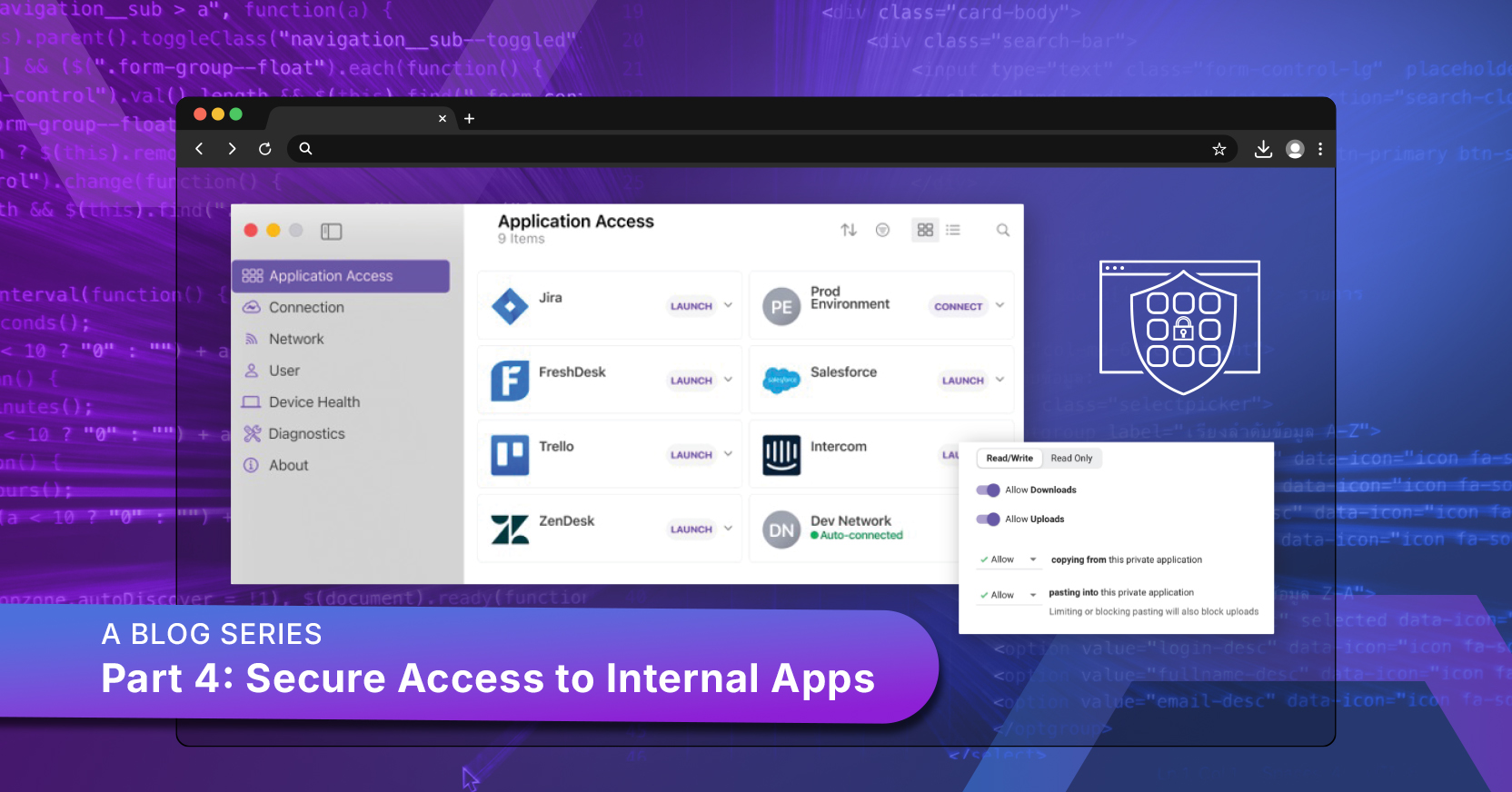
Instead of building out heavy infrastructure, the bank leveraged Menlo Secure Application Access (SAA) to provide seamless, secure access to internal applications. The difference in deployment speed was stark. Brandon Goforth, VP IT Manager, recalled the setup process: "We probably had it up and going in, golly, two hours."
But speed wasn't the only benefit; the platform’s core threat prevention capabilities provided a safety net that traditional tools couldn't match. Dwayne highlighted the operational relief this provides his team: "If somebody clicks on something... we don't have to go and grab the machine and rebuild it. It gives you that warm fuzzy feeling that everything's okay."
So, what should CISOs look for in a Secure Enterprise Browser solution? The panel identified three non-negotiable features:
The browser landscape is shifting fast. If you want to dive deeper into the GigaOm Radar report and hear more about First Community Bank’s journey, you can watch the full webinar recording.
Menlo Security