The government's call for urgent cybersecurity reviews signals something bigger: Singapore's race to lead in AI requires rethinking every assumption about digital risk.
Singapore's Cyber Security Agency just delivered its clearest signal yet about the future of digital risk. On May 9, 2026, CSA Commissioner David Koh wrote directly to every Critical Information Infrastructure (CII) operator in the country with a strong and urgent message: your existing assumptions about cyber risk management "may no longer be valid."
The letter wasn't just about compliance. It was about competitive advantage. As Singapore advances its sovereign AI strategy, the country's digital infrastructure must evolve at the same pace as its AI ambitions. And that evolution starts with recognising where the biggest gap in your security architecture actually sits.
Coordinating Minister for National Security K Shanmugam called for "a whole-of-country effort" to defend Singapore from AI-enabled threats. The urgency isn't theoretical. Senior Minister of State Tan Kiat How told Parliament that vulnerabilities once taking weeks to discover now surface "in hours, sometimes minutes."
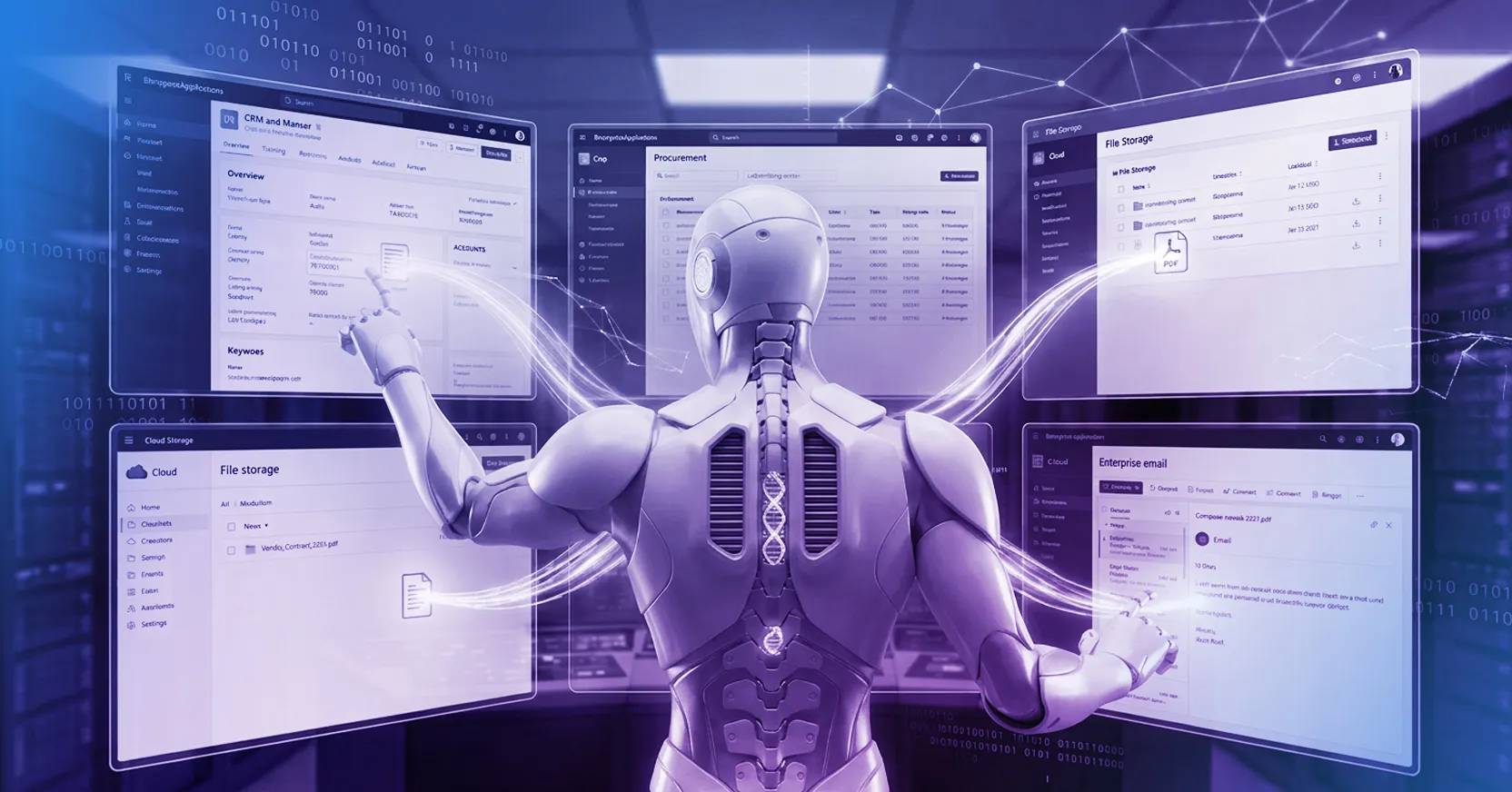
The math is stark: AI systems have identified thousands of zero-day vulnerabilities in testing environments. Complete corporate network intrusions that required human expertise at every step now execute autonomously in 32 automated steps. What used to take skilled attackers weeks now happens in minutes.
This isn't just a technical problem. It's an economic one. The attacker's cost structure has fundamentally changed, while most organisations are still defending with assumptions built for human-speed threats.
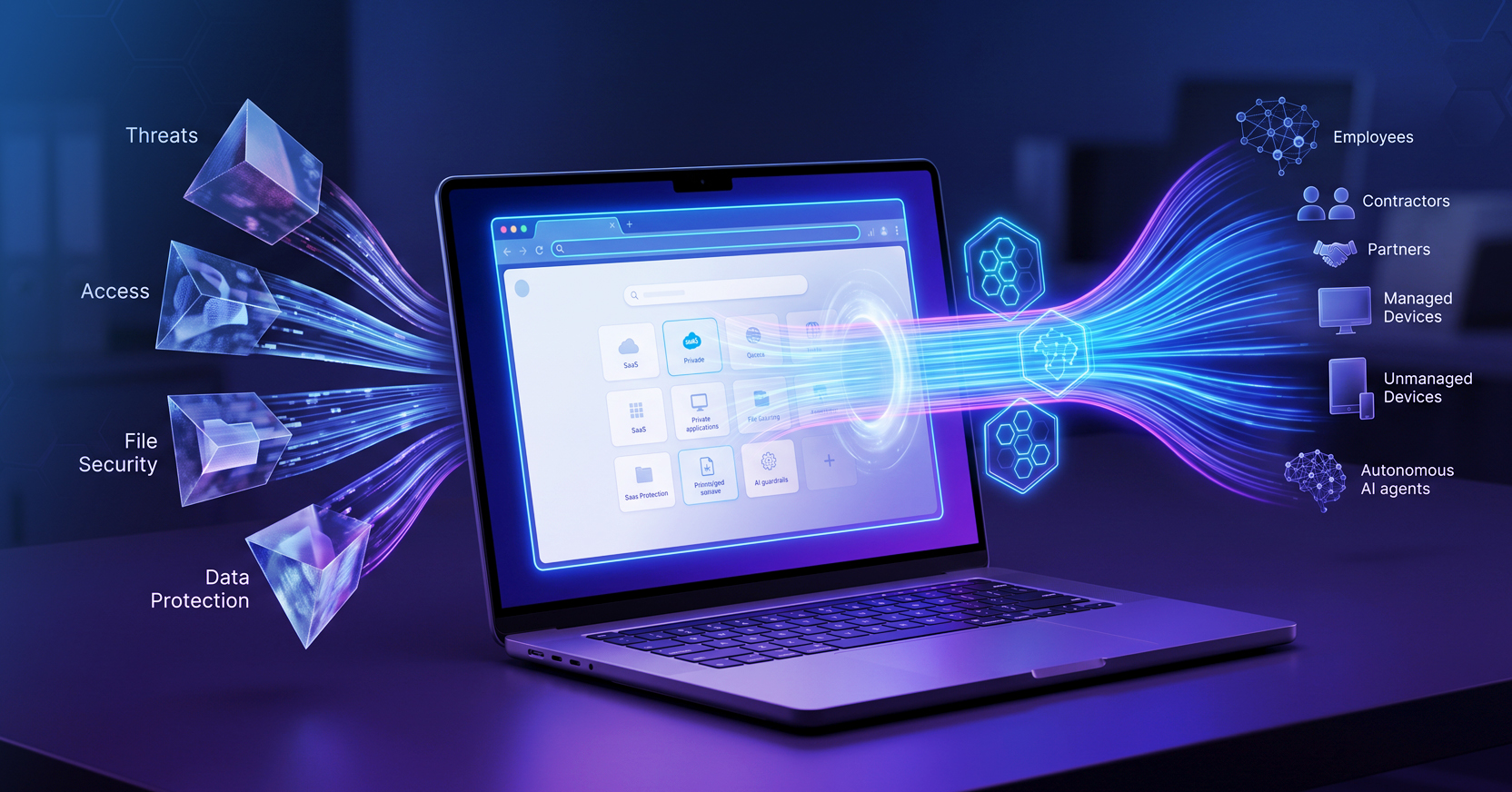
Every employee in Singapore's 11 critical infrastructure sectors starts their workday the same way: opening a browser. They access cloud applications, review sensitive documents, communicate with partners, and increasingly, interact with AI services. All through that single gateway to the digital world.
Yet in most security architecture reviews, the browser gets treated as infrastructure — something pre-installed that requires no additional thought. That assumption is precisely what makes it the highest-value target for AI-powered attacks.
"Most breaches begin at an unmanaged asset — forgotten internet-facing systems, third-party dependencies, and shadow cloud accounts that fall outside an organisation's line of sight," Minister Tan explained to Parliament. The browser sits at the centre of all three categories.
Consider telecommunications — which Minister Shanmugam specifically called a "high-value target." A compromised browser session in that sector doesn't just affect one organisation. It creates pathways into interconnected national infrastructure systems that power everything from financial services to energy distribution.
The sophistication gap is closing fast. AI-powered social engineering now creates hyper-personalized phishing attempts that scrape public information to craft communications nearly indistinguishable from legitimate business correspondence. Multi-stage attack chains execute without human oversight, moving from initial browser compromise to lateral network movement autonomously.
Traditional security controls were built for human attackers who make mistakes, take time between steps, and leave detectable patterns. AI attackers do none of those things.
The implications for CII operators are clear: you can't patch fast enough, train users perfectly enough, or detect threats quickly enough to keep up with AI-accelerated attack timelines using traditional approaches.
The solution isn't adding more tools to the stack. It's rethinking where the real battle happens. If every critical business process flows through the browser, that's where your strongest defenses need to sit.
Modern browser security architecture starts with a simple principle: assume every web page, file, and link could be malicious, and design accordingly. Instead of trying to detect and block threats at the endpoint, you eliminate the attack surface entirely.
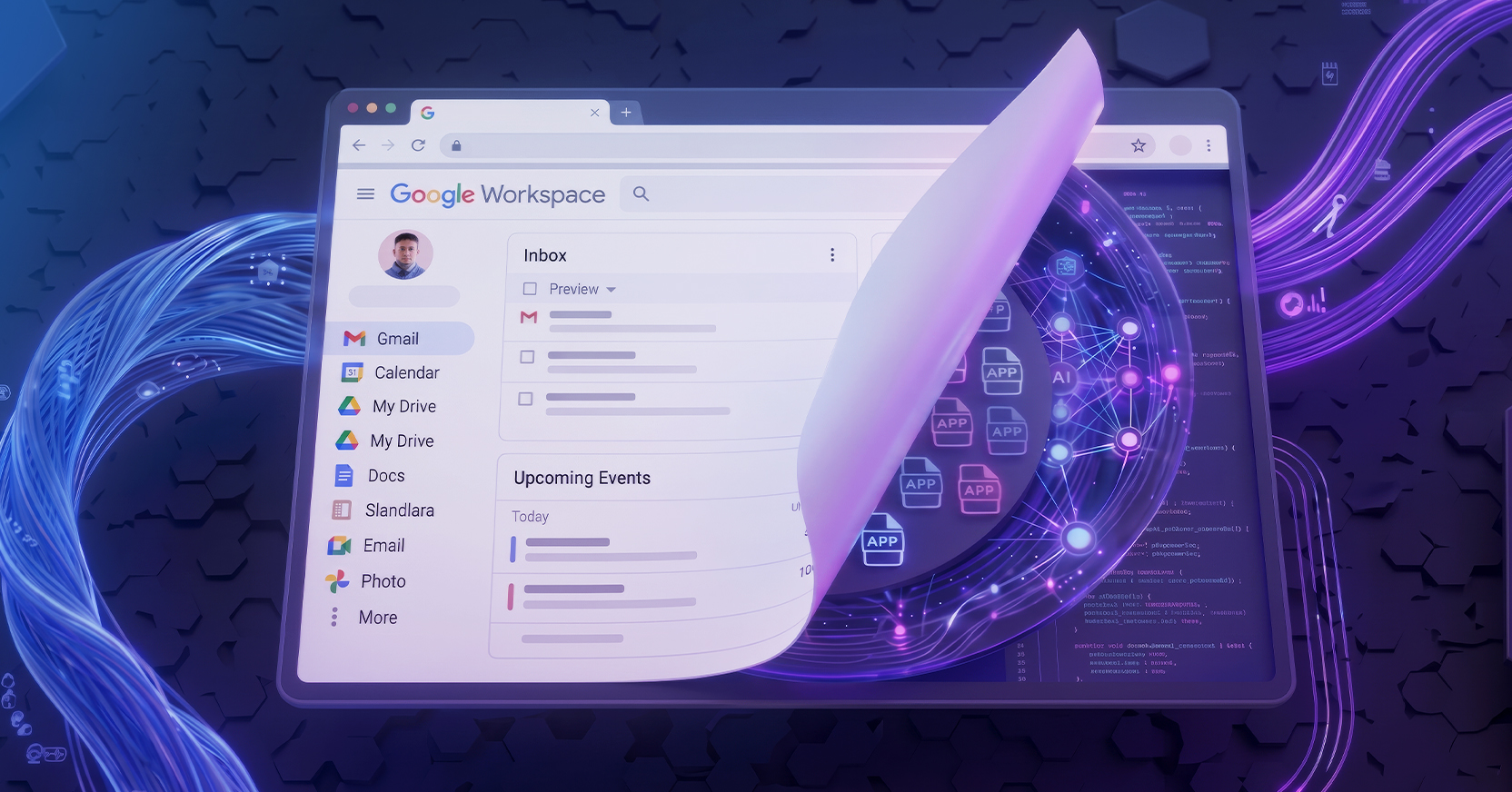
This means executing all web content in isolated cloud environments, separate from your corporate network and endpoints. Malicious code detonates harmlessly in disposable containers. AI-powered phishing pages render with pixel-perfect fidelity but can't access your systems. Weaponised documents open and execute in isolation, disappearing when the session ends.
For the user, nothing changes. For the attacker, everything does.
Menlo Security was built on a fundamental insight: you cannot patch your way out of zero-day threats, and you cannot train users to be perfect. Instead, you eliminate the attack surface entirely.
Our Secure Cloud Browser executes all web content — every page, every file, every link — in a remote, disposable cloud environment. Malicious code never reaches the endpoint. AI-powered phishing pages render harmlessly in isolation. Weaponised documents detonate in a container that disappears the moment the session ends. The user gets a seamless, pixel-perfect experience. The attacker gets nothing.
For Singapore's CII operators specifically, Menlo delivers four critical capabilities:
Commissioner Koh's decision to write directly to boards and chief executives reflects a crucial reality: cyber risk has become business risk at the highest level. But board members need more than threat statistics to act. They need to understand where their organisation's most critical vulnerabilities actually sit.
The browser represents the intersection of three board-level concerns:
Workforce Productivity: Every AI tool your employees want to use, every cloud application driving business value, every document collaboration — it all happens in the browser. Securing it shouldn't slow it down.
Regulatory Compliance: Full visibility into every web session, including shadow IT usage and unmanaged devices, gives you the asset inventory and access control documentation regulators increasingly demand.
Competitive Positioning: Organisations that can safely leverage AI services gain advantages in everything from customer service to operational efficiency. Those that can't fall behind.
The question isn't whether to invest in browser security. It's whether Singapore's critical infrastructure operators can afford to remain vulnerable in their most-used application while the country races to lead in AI innovation.
How does browser isolation differ from traditional endpoint protection? Traditional endpoint security tries to detect and block malicious content after it reaches your device. Browser isolation prevents malicious content from ever reaching your network or endpoints by executing everything in remote, disposable cloud environments. You get complete protection without the detection delays that AI-speed attacks exploit.
What about performance and user experience concerns? Modern browser security platforms deliver pixel-perfect rendering with minimal latency. Users interact with web applications exactly as they would locally, but all the actual code execution happens in the cloud. For most applications, the performance difference is imperceptible, while the security improvement is absolute.
How does this approach handle AI services and applications? Browser isolation actually enables safer AI adoption by letting you enforce granular policies over which AI services employees can access, what data can be submitted, and how AI-generated content is handled. You get the productivity benefits of AI tools without losing visibility or control over sensitive information.
Can this architecture scale across large, distributed organisations? Cloud-based browser security scales elastically with demand. Whether you have hundreds or hundreds of thousands of users across multiple countries, the infrastructure adjusts automatically. This is particularly important for CII operators who can't afford capacity limitations during critical periods.
What happens to existing security investments and tools? Browser isolation complements your existing security stack rather than replacing it. Your EDR, email security, and network monitoring tools all continue to function. You're adding a new layer of protection at the point where most attacks originate, not rebuilding your entire architecture.
Singapore's government has issued the call. The CSA's review creates both urgency and opportunity for CII operators to examine every assumption about their cyber risk posture. The browser cannot be left out of that examination.
As Singapore advances its sovereign AI strategy, the organisations that can safely leverage AI services while maintaining complete security will have decisive competitive advantages. Those that cannot will find themselves choosing between security and innovation — a choice that gets harder to justify with each passing quarter.
The technology to close the browser security gap exists today. The regulatory signal is clear. The business case is compelling. What remains is the decision to act before the next AI-powered attack makes the choice for you.
Ready to discuss how browser security fits into your organisation's digital transformation strategy? Contact our APAC team at apac@menlosecurity.com to discuss your specific requirements.
About the Author
Stephanie Boo is Senior Vice President, APAC at Menlo Security, leading go-to-market strategy across Asia Pacific. Based in Singapore, she brings two decades of cybersecurity expertise from FireEye, Zscaler, Cisco IronPort, and Symantec. She has been instrumental in expanding Menlo Security's presence across the region, working closely with critical infrastructure operators, financial institutions, and government agencies to address evolving browser-based threats. A trusted voice in the APAC security community, Stephanie is passionate about helping organisations move beyond legacy perimeter defences toward isolation-first architectures that eliminate the attack surface entirely.
Connect with Stephanie on LinkedIn.
Menlo Security