Security controls often transfer their uncertainty to employees through warnings, blocked files, quarantine notices, and prompts asking whether an action is safe or not. Yet users rarely have the context needed to evaluate hidden code, suspicious file behavior, or convincing social engineering. This “user tax” interrupts legitimate work without reliably preventing attacks. Over time, repeated warnings and false positives encourage automatic approvals, support requests, and workarounds that move activity beyond governed systems.
Modern content protection should prevent dangerous outcomes rather than requiring employees to recognize every threat. Preventive controls can isolate active web content from endpoints, inspect and sanitize files before delivery, and identify or mask sensitive information in accordance with policy. Because protection occurs before malicious execution or data exposure, users can continue working without becoming part of the security decision process.
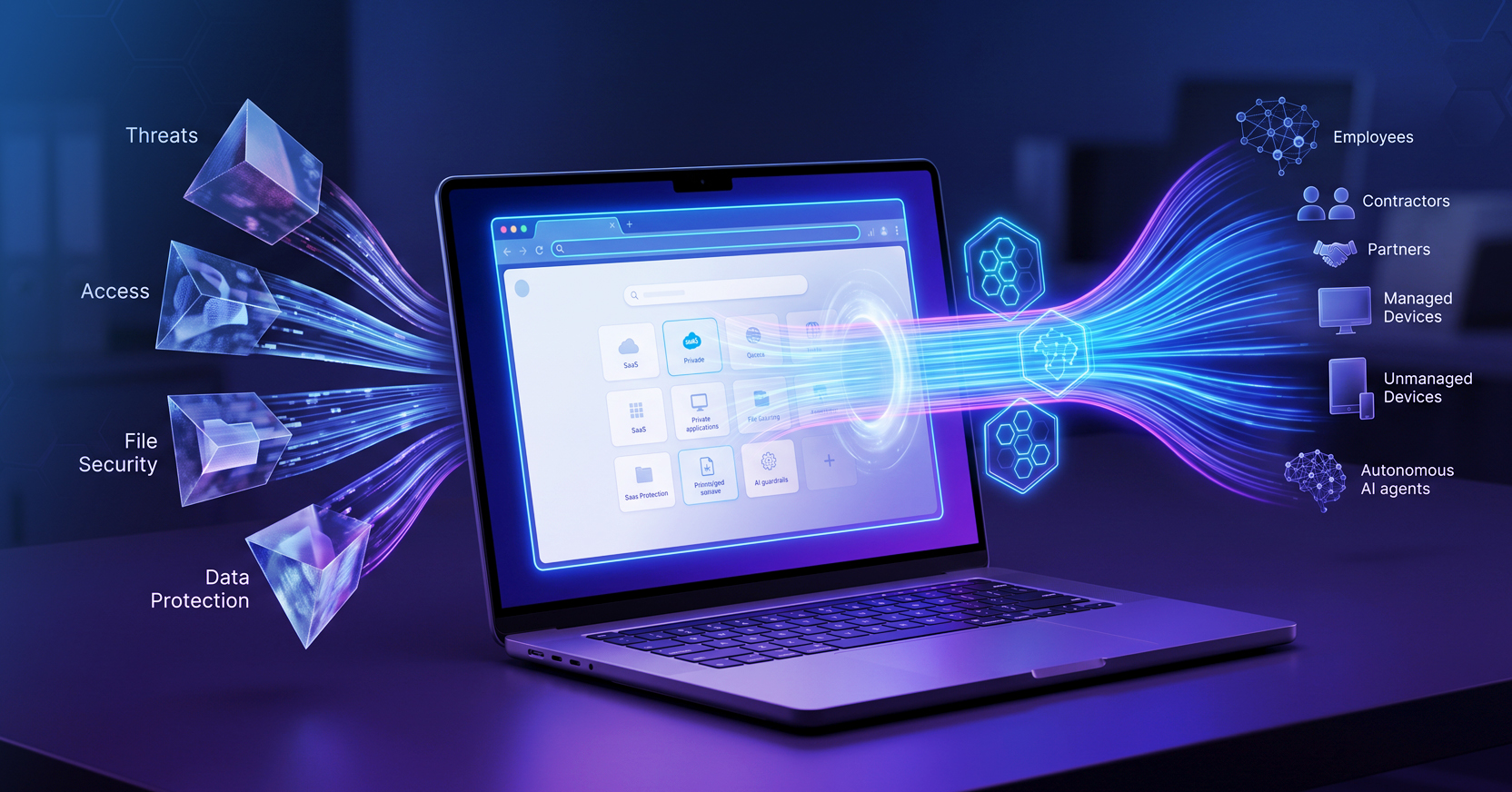
Menlo Security applies this prevention-first philosophy across browser activity, files, and sensitive data. Protection operates in the background while security teams retain centralized policy control, visibility, and evidence of what was prevented. The result is a security model that preserves legitimate content and workflows while reducing reliance on detection, user judgment, and remediation after compromise. Modern security should ask less of users because the architecture can do more.
An employee receives a document from a customer, follows a link shared by a colleague, or uploads content to an approved business tool. What began as an ordinary task suddenly becomes a security test. A warning appears asking whether the file is trustworthy, the destination is safe, or the action should continue.
The prompt may look authoritative, but the employee rarely has the context needed to answer confidently. They cannot inspect hidden code, evaluate file behavior, or determine whether a familiar-looking website has been compromised. Yet the security control still leaves them accountable for what happens next.
Every warning, quarantine notice, blocked file, and help desk request imposes a user tax on ordinary work. It consumes time, disrupts workflows, and frustrates employees without reliably preventing attacks. Repeated often enough, these interruptions also teach people to dismiss warnings or seek workarounds.
Security should resolve uncertainty for the user. Employees should benefit from the controls around them while remaining focused on their work.
Employees are hired to complete business tasks. When someone opens an invoice, reviews a résumé, downloads a report, or shares a presentation, their attention is rightly focused on getting the work done. Threat analysis requires context and tools most employees do not have, so asking them whether a link is malicious or a file contains hidden code turns a routine task into a guess.
Attackers understand this dynamic. They design phishing messages, websites, and documents to resemble the content employees handle every day. Generative AI has made that imitation easier, allowing attackers to create polished messages tailored to a company, role, or current business activity. Misspellings and awkward phrasing were never dependable security signals, and they are becoming even less useful.
Security awareness training still matters. It can help employees recognize suspicious activity, understand company policy, and report potential threats quickly. Its role is to reinforce an architecture that already prevents malicious content from executing. The primary barrier must come from technical controls.
Organizations often label this outcome “human error.” In practice, it is the predictable result of assigning security decisions to people who lack the context and tools to make them. A reasonable click should not be enough to compromise the business; the architecture must account for that behavior.
Security warnings are intended to interrupt risky behavior. But when they appear during routine tasks, they often create another version of the same problem: the employee is asked to make a judgment without the evidence needed to make it. A file is flagged, a website generates a caution message, or an upload is blocked, yet the warning rarely explains the actual risk in terms that the user can evaluate.
When most warnings turn out to be routine, users adapt. They learn that clicking “continue” is usually the fastest path back to work. Inconsistent language, severity ratings, and recommendations across tools make the actual risk even harder to judge. Repeated false positives eventually teach users to clear warnings quickly so they can return to work.
Blocking and quarantining content can impose a similar cost. The employee loses access to something they may need, while the security team inherits a support ticket, an investigation, and a manual release process. Neither side becomes safer simply because the interruption created more work.
Prompts still belong where genuine consent or business judgment is required. Determining whether content can execute safely is a job for the security control. Users should be involved only when their decision truly matters.
When the sanctioned path becomes too difficult, employees look for another route. They may send the file via personal email, upload it to an unsanctioned sharing service, use a shadow AI tool, or manually copy sensitive information into another application. The immediate task gets completed, but the activity moves beyond the policies, controls, and telemetry the organization relies on to protect it.
Security teams bear the brunt of this friction. File-release requests, policy exceptions, false-positive investigations, and user complaints consume time that could be spent addressing meaningful risk. As these requests accumulate, pressure also grows to weaken controls broadly so legitimate work can continue.
Reducing friction keeps business activity inside governed systems, where security teams can see it and apply protection consistently. Controls that preserve legitimate workflows improve the user experience while strengthening security.
Detection-based security begins by asking whether the content appears malicious. It compares activity against known signatures and suspicious behaviors, then makes a judgment based on the available evidence. When confidence is low, the control may block the content, quarantine it, or return the uncertainty to the user with another warning.
Preventive architecture begins with a different assumption. Untrusted content should not gain access to the endpoint simply because it avoided detection. Instead of waiting to determine whether something is dangerous, these controls remove the opportunity for it to cause harm.
Web security, for example, can run active content away from the endpoint (aka isolate it) and deliver a safe experience to the employee. The user can visit the site and complete the intended task without giving potentially malicious code a path to the device.
File security can apply the same principle to downloads by inspecting and sanitizing files before delivery. Malicious elements are removed while content is delivered. Modern file security solutions do this while still delivering legitimate file content, formatting, and functionality.
Data security can also act before a disclosure occurs. Sensitive information moving through browsers, files, and applications can be identified and obfuscated in accordance with policy, without expecting employees to recognize every instance of regulated or confidential data.
Together, these controls change the user’s role. Employees no longer have to pause and decide whether content is dangerous because the architecture prevents the dangerous outcome. Security teams still receive the telemetry needed to investigate trends, understand attempted attacks, and tune policy. The protection happens before execution or exposure, reducing dependence on signatures, user judgment, and remediation after the damage is done.
Modern content protection should be measured by two outcomes: whether it prevents harm and whether legitimate work can continue. Five principles help establish that standard.
Together, these principles shift security away from interruption and recovery. The result is protection that works before harm occurs while allowing employees to keep working as intended.
Employees should be able to open a document, visit a website, or share permitted information without stopping to consider the security controls behind the interaction. Dangerous code does not reach the endpoint. Sensitive data remains governed according to policy. The content and functionality needed to complete the task remain available.
The employee simply sees work proceeding as expected. Behind that experience, the security team retains centralized control, visibility into content activity, and evidence of prevented threats and data exposures. Users are spared another stream of security decisions.
This is the philosophy behind Menlo Security: protect browser activity, files, and sensitive data at the point where content becomes work. By preventing malicious execution and enforcing data policy in the background, Menlo helps organizations reduce risk while allowing employees to work without unnecessary interruptions.
See how Menlo Security gives employees a safer path to work without making them responsible for identifying threats, while also providing security teams with centralized visibility and control.
Menlo Security