The enterprise has quietly restructured itself around the browser. Every application, every workflow, every piece of sensitive data now flows through what was once just a simple web viewer. Yet most organizations are still protecting this critical infrastructure with detection-based tools designed for a different era.
This mismatch has created a fundamental security paradox. As browsers become more central to business operations, they've also become the primary target for sophisticated attacks. And these attacks aren't waiting for security teams to catch up.
The latest Chrome vulnerability—the fourth actively exploited zero-day patched in 2026—illustrates this perfectly. Attackers moved first, exploited the flaw in live environments, then disappeared before patches could close the window. For security leaders, this pattern represents more than just another incident to manage. It's evidence that the traditional security model has reached its breaking point.
Here's what actually happens when a browser zero-day surfaces.
An exploit gets discovered and immediately weaponized. Security researchers and browser vendors race to develop a patch, but that process takes time. Meanwhile, attackers operate freely within what security professionals call the "patch gap"—the window between exploit discovery and widespread patch deployment.
That window isn't theoretical. It's measured in hours or days where your workforce remains exposed to active exploitation. Think about how patch deployment actually works in your environment. Chrome displays that familiar "Relaunch to update" notification, but most users don't recognize it as a security event. They see another routine browser prompt and assume they'll restart later when it's more convenient.
For large organizations, the delay extends even further. Updates require testing, coordination, and often scheduled maintenance windows. During this entire period, every browser session becomes a potential entry point for attackers who don't wait for permission.
According to Gartner's latest research, 74% of successful browser-based attacks occur during the patch gap, before organizations can deploy available fixes. This isn't a patching failure—it's a fundamental limitation of reactive security models.
The shift happened gradually, then all at once.
Over the past five years, the average enterprise moved 80% of its applications to SaaS platforms, according to Forrester. Employees no longer install software locally—they access everything through browser tabs. Customer data, financial systems, development environments, AI tools, and collaboration platforms all run through the same interface that was originally designed to display static web pages.
This transformation turned every browser into the equivalent of a universal application runtime. But unlike traditional applications, browsers weren't architected with enterprise security as the primary concern. They were built for openness, compatibility, and performance.
The result? Your most critical business applications now run on infrastructure designed for a different threat model entirely. Every webpage can execute code, access system resources, and interact with other applications—all within a trusted environment that users access dozens of times per day.
Attackers recognize this reality. Browser vulnerabilities offer direct access to user sessions, corporate data, and connected systems, all wrapped in the familiar interface that employees trust implicitly. It's the perfect attack surface: ubiquitous, trusted, and constantly processing untrusted content.
Most security stacks weren't designed for this browser-centric world.
Endpoint detection and response (EDR) tools provide excellent visibility into device activity, but they operate after content has already reached the endpoint. By the time EDR identifies suspicious browser behavior, the initial compromise may have already occurred.
Secure web gateways (SWG) filter web traffic but allow legitimate sites to deliver active content directly to browsers. Since most attacks now use compromised legitimate websites rather than obviously malicious domains, traditional URL filtering provides limited protection against sophisticated threats.
Sandboxing technologies add another layer of analysis, but modern attacks are designed to evade detection or remain dormant until they reach production environments. Advanced persistent threats often include environment awareness that prevents them from executing in analysis systems.
Each of these controls serves an important function, but they all share the same fundamental limitation: they assume threats can be identified and stopped before causing damage. In a world where zero-days are exploited before they're discovered, that assumption no longer holds.
This is where a different approach becomes necessary.
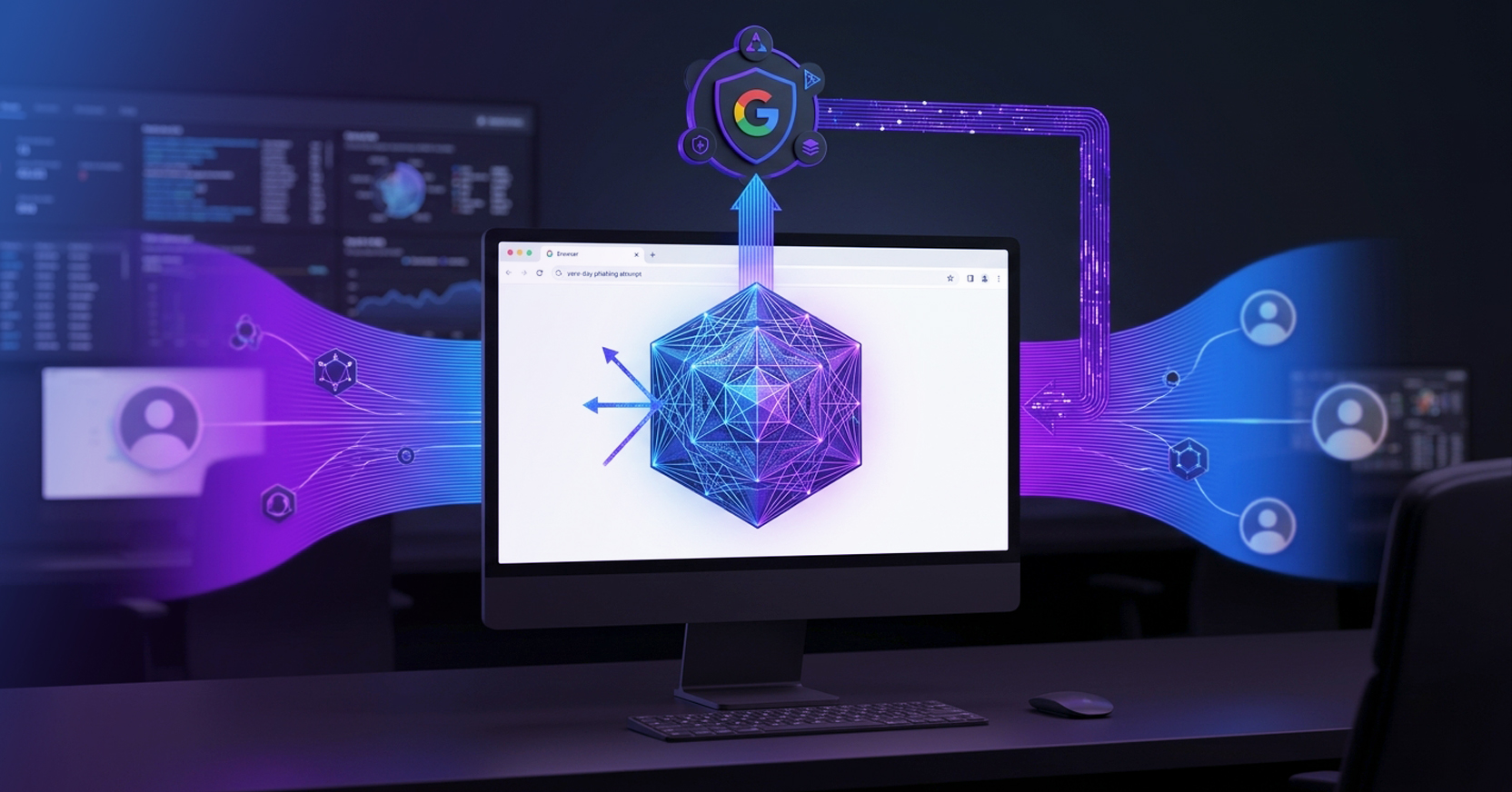
Instead of trying to detect and stop browser threats, cloud-based browser isolation technology eliminates the attack surface entirely. Built from the ground up, cloud-based browser isolation solves what legacy RBI never could.Web content executes in a remote environment, completely separated from the user's device and your corporate network: seamless, fast, and completely transparent to the end user. No lag. No broken layouts. No reason to limit coverage. What reaches the browser isn't active code—it's a safe visual representation of the webpage.
Here's how this changes the security equation: when a zero-day exploit attempts to execute, it runs in an isolated environment with no access to corporate resources, user credentials, or network infrastructure. The exploit may work perfectly, but it compromises nothing valuable.
Menlo's Browser Security Platform takes this approach to its logical conclusion. All web content executes in Menlo Cloud, our secure isolation infrastructure. Users interact with a pixel-perfect rendering of web applications, but no scripts, plugins, or potentially malicious content ever reach their devices.
For security leaders, this represents a fundamental shift from reactive to proactive protection. Instead of racing to patch vulnerabilities before attackers exploit them, you eliminate the exploitation path entirely. Zero-days become irrelevant because they can't reach the systems they're designed to compromise.
The implications extend beyond just browser security.
When you remove browser-based attack vectors from your threat model, you can focus security resources on other high-value activities. Your team spends less time managing browser updates and responding to web-based incidents, and more time on other strategic initiatives like cloud security, AI governance, and business enablement.
This shift also transforms how you approach workforce productivity. Employees can safely access any website, download any file, or interact with any web application without security friction. The traditional trade-off between security and usability disappears because isolation provides both simultaneously.
Most importantly, you gain predictable security outcomes. Browser-based attacks don't succeed sometimes or require rapid response—they simply can't occur. That certainty allows you to make commitments to leadership about risk reduction that other approaches can't match.
The browser isn't going to become less central to business operations. If anything, emerging technologies like AI assistants and autonomous agents will make browser security even more critical to organizational success.
The question for security leaders isn't whether to address browser security gaps—it's whether to do it proactively or reactively. Traditional approaches ask you to stay ahead of an accelerating threat landscape. Isolation lets you step outside that race entirely.
For organizations ready to make that shift, the path is clear. Evaluate how much of your critical business activity flows through browsers. Consider whether your current security stack can protect that activity against threats that haven't been discovered yet. Then decide whether you want to keep playing defense or change the game entirely.
The next Chrome zero-day is already being developed. The question is whether it will matter to your organization when it arrives.
Menlo Security