Anthropic just did something the cybersecurity industry has been quietly dreading: it announced that AI has crossed a threshold. Not in theory. Not in a research paper. In practice, with receipts.
Project Glasswing, a closed, invite-only initiative launched this week with partners including AWS, Microsoft, Cisco, CrowdStrike, Google, and Palo Alto Networks, used an unreleased frontier model called Claude Mythos Preview to scan critical open-source software at scale. The results were striking. Thousands of high-severity vulnerabilities discovered across every major operating system and web browser. A 27-year-old flaw in OpenBSD, one of the most security-hardened operating systems in the world, found and patched before the public announcement. A 16-year-old bug in FFmpeg surfaced after automated tools had scanned the same line of code five million times without catching it.
Let that sink in. Five million scans. One AI model. One conversation.
AI compresses the timeline between discovery and exploitation, and that changes the entire economics of cybersecurity. Security teams have always operated under a brutal constraint: finding flaws takes expert-level skill, time, and resources that most organizations simply don’t have. Attackers have long understood that they only need to find one way in while defenders have to protect everything. That asymmetry has shaped the field for decades.
Project Glasswing signals that the economics are changing. Fast.
AI models capable of discovering previously unknown vulnerabilities autonomously, without human steering, compress the timeline between discovery and potential exploitation. CrowdStrike’s CTO put it plainly in his statement: what once took months now happens in minutes. That’s not hyperbole. That’s the new baseline.
For defenders, this is both an opportunity and an urgent warning. The same capabilities that helped partners in Glasswing patch decades-old bugs before attackers could exploit them are capabilities that adversaries are racing toward. Anthropic was explicit about this: the reason access to Mythos Preview is tightly restricted is precisely because this tool is being treated as sensitive. When a frontier AI lab rings that alarm bell, security teams should listen.
Because it powers virtually everything and has historically been the least protected. One of the clearest signals in Project Glasswing is where it looked. The initiative explicitly targets open-source software and the supply chain that underpins modern enterprise infrastructure. That focus is deliberate, and it reflects a reality that enterprise security teams have been slow to fully internalize.
Open-source components power virtually every enterprise application. They run your cloud infrastructure, your CI/CD pipelines, your web servers, your video conferencing tools. The maintainers responsible for their security have historically operated without access to sophisticated security resources. As the Linux Foundation’s CEO noted in the Glasswing announcement, AI-augmented security has the potential to become a trusted sidekick for every maintainer, extending capabilities that previously only well-funded security teams could access.
That's the defensive case. But here's the offensive corollary: if open-source software is where the vulnerabilities are concentrated, and AI is now capable of surfacing those vulnerabilities at scale, then the supply chain risk organizations have been warned about for years has just become substantially more real.
By shifting focus from reactive patching to active containment. The traditional security response to vulnerability discovery is reactive: something is found, a patch is issued, organizations scramble to update. That loop has always had a lag. Sometimes days, sometimes months, sometimes years (see: the 27-year-old OpenBSD bug that Project Glasswing uncovered). AI shortens the discovery side of that loop dramatically, but it does not automatically shorten the patching side. And therein lies the danger.
When AI compresses the gap between discovery and exploitation, the question for security teams shifts. It's no longer just "how quickly can we patch?" It's "what can an attacker actually do if they get through before we patch?"
That is a fundamentally different posture. It requires thinking about containment, isolation, and blast radius reduction rather than perimeter defense alone. The question shifts from "where are the vulnerabilities?" to "what would an attacker be able to reach from the browser, from the endpoint, from the application layer, if they exploited one?"
This is where the concept of isolation becomes more important, not less, in an AI-accelerated threat landscape. If attackers have AI-powered tools to find zero-days faster than defenders can close them, then reducing what an attacker can actually do once they're inside becomes a front-line defensive priority.
It means that every capability built for defense can eventually be turned toward offense. The industry needs to act on that reality now. Project Glasswing is, at its core, an attempt to get ahead of a dual-use problem that Anthropic saw coming and chose to address proactively rather than quietly. The partners involved represent much of the world’s most critical infrastructure. The $100M in usage credits, the $4M in donations to open-source security organizations, and the restricted access model all signal that this is not a product launch. It is a coordinated response to something the lab believes is genuinely urgent.
That seriousness should inform how enterprise security teams and their vendors think about the next 12 to 18 months. AI-powered vulnerability discovery is no longer theoretical. It is here, and it is capable. The version that gets into the wrong hands won't come with a press release.
Start by assuming the threat environment has already changed. Because it has. For organizations thinking about how to respond to the risk landscape Project Glasswing illuminates, three priorities stand out.
First, get serious about open-source and supply-chain visibility. If your security stack is not giving you visibility into the open-source components running in your environment, and the vulnerabilities in those components, that gap is becoming more expensive by the day. Glasswing made clear that the open-source ecosystem is where AI-powered discovery will focus first.
Second, accept that patching speed is no longer your primary line of defense. AI-assisted attack tooling will eventually reach adversaries. The question is not whether, it is when. Security architectures that depend on fast patching as the frontline defense against zero-days will face growing pressure in a world where discovery-to-exploitation windows are measured in minutes, not months.
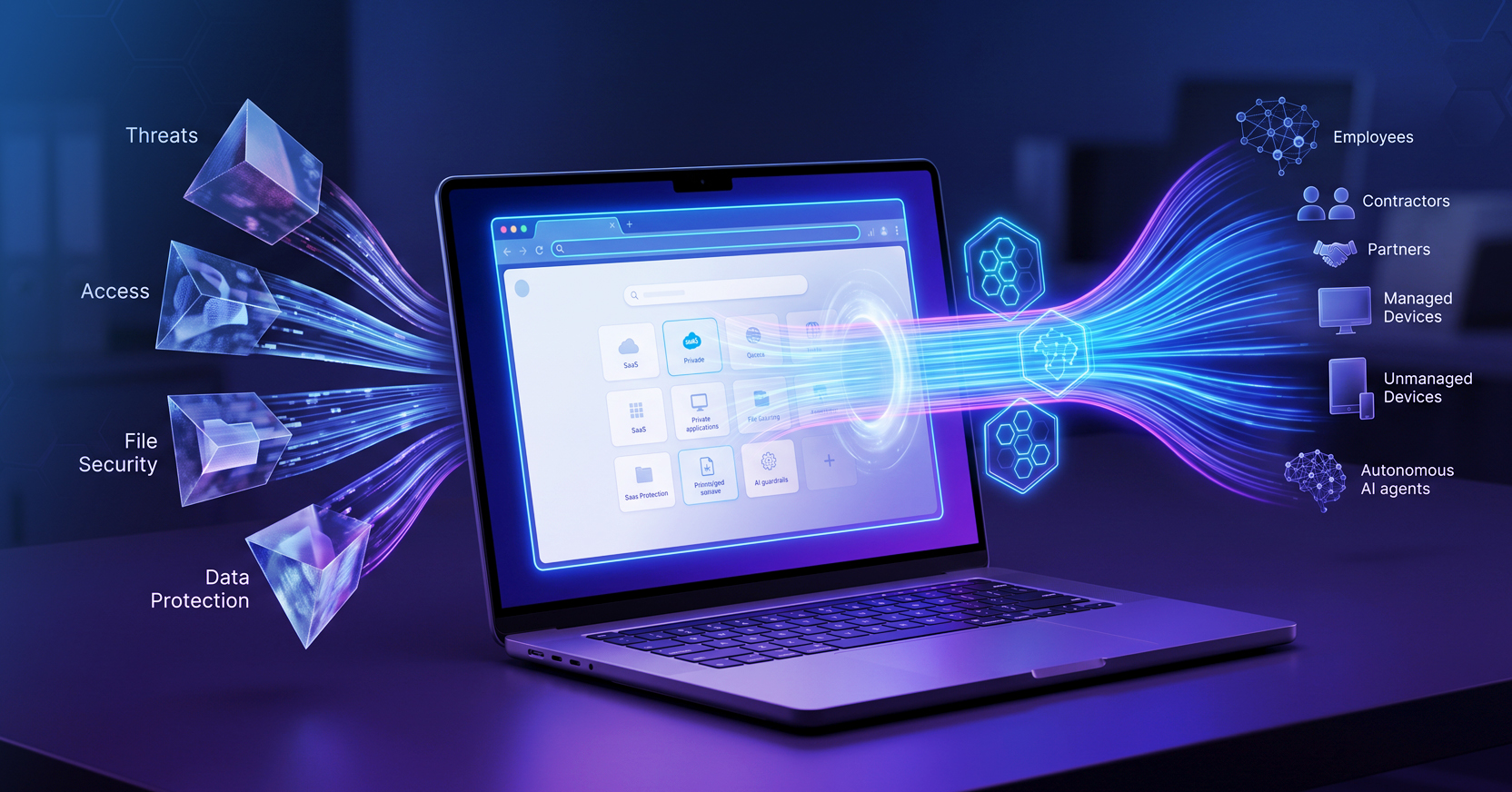
Third, invest in isolation and containment at the browser layer, where most enterprise activity actually happens. This is where Menlo Security’s approach becomes directly relevant. When vulnerabilities in the software stack can be found faster than they can be patched, the ability to limit what an attacker can execute from a compromised entry point becomes a critical control. That means stopping threats before they reach the endpoint, and governing what AI agents, both sanctioned and unsanctioned, can access and act upon in the browser.
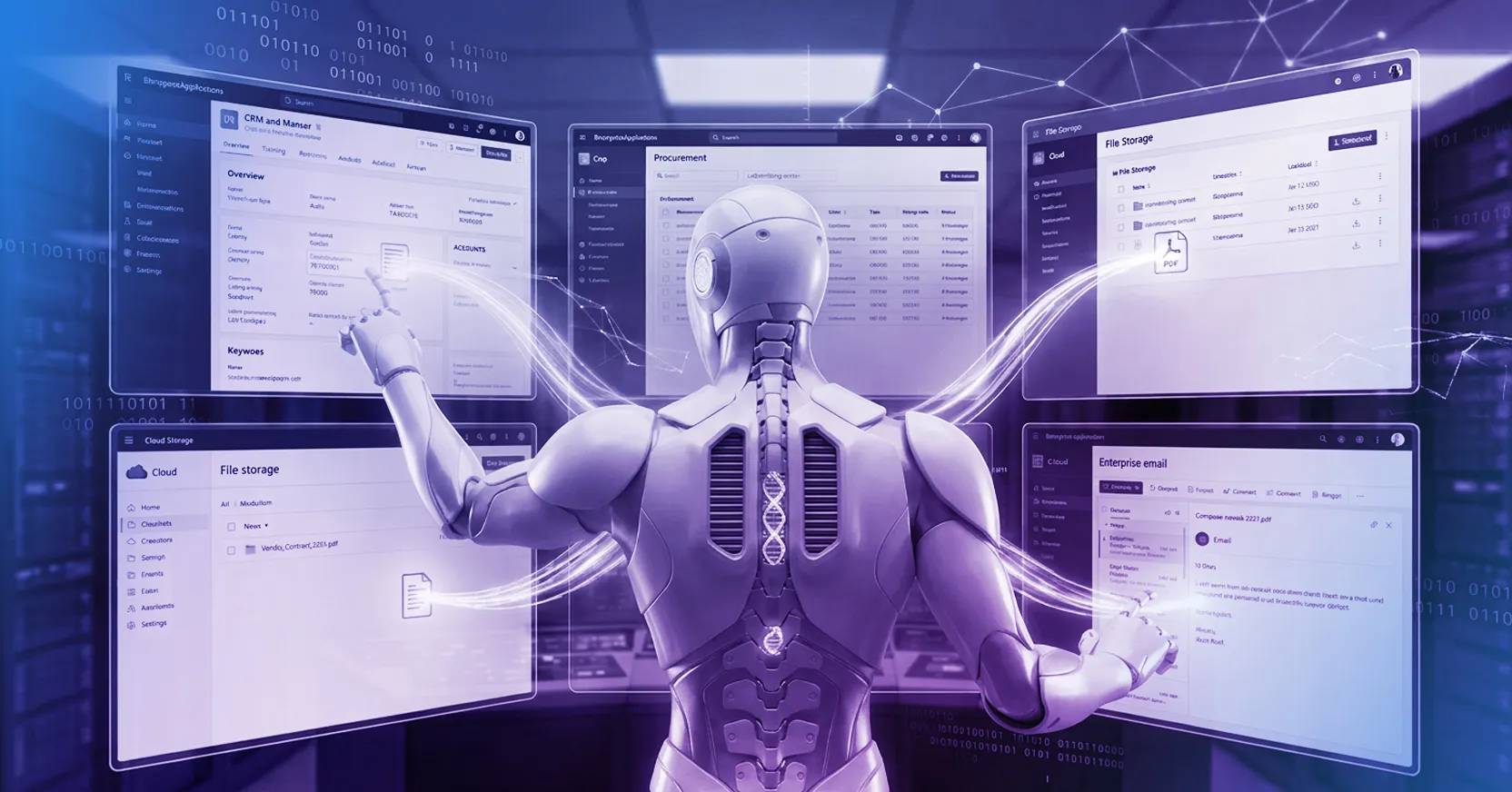
That last point matters more than it might initially seem. As Anthropic’s own announcement notes, open-source software is the foundation of “the very systems AI agents use to write new software.” The attack surface extends to every AI agent now operating inside enterprise environments, accessing data, running code, and taking actions on behalf of users at machine speed. Menlo Agent Runtime Security (MARS), part of the Menlo Browser Security Platform, is purpose-built to address exactly this: providing runtime governance, observability, and data loss prevention for both human users and AI agents operating in the browser. Every agent transaction is governed, logged, and auditable before something goes wrong.
Project Glasswing is a beginning, not an endpoint. Anthropic said as much: the work of defending the world’s cyber infrastructure might take years, while AI capabilities will advance substantially in months. That mismatch is the problem the entire security industry needs to be organized around. The organizations that treat it that way, building defenses that assume faster discovery, faster exploitation, and shorter reaction windows, will be better positioned than those still operating on the old timeline.
Menlo Security protects organizations from browser-based attacks, zero-day exploits, and AI-enabled threats by isolating web and AI activity before it can reach the endpoint. Learn more about Menlo Agent Runtime Security (MARS) and how the Menlo Browser Security Platform helps organizations limit exposure before a patch exists at https://www.menlosecurity.com/.
Menlo Security