The browser has become the primary workspace for modern employees. Email, cloud applications, collaboration tools, and internal systems all reside in the browser, making it the primary location where most work begins and ends. As a result, it is also where users routinely interact with content that originates outside the organization.
Despite this reality, many security strategies still treat the browser as a passive conduit and rely on downstream controls to manage risk. In practice, the browser actively renders content, executes scripts, and initiates downloads, giving attackers a direct path to deliver file-borne threats. Many modern attacks now arrive through browser-delivered downloads triggered by phishing links, SaaS notifications, or shared content, making the browser an active attack surface that can no longer be ignored.
File-borne attacks are often treated as an endpoint problem, but in reality, they are a browser problem first. Most malicious files today are not introduced through removable media or internal shares. They are downloaded through browsers as part of routine workflows, often from sources users already trust.
Those files often originate from legitimate-looking websites, SaaS platforms, or collaboration portals that are embedded in daily work. A shared document or cloud storage link rarely appears suspicious on its own, which puts the browser in the role of gatekeeper, determining whether a file is inspected, isolated, or delivered directly to the device.
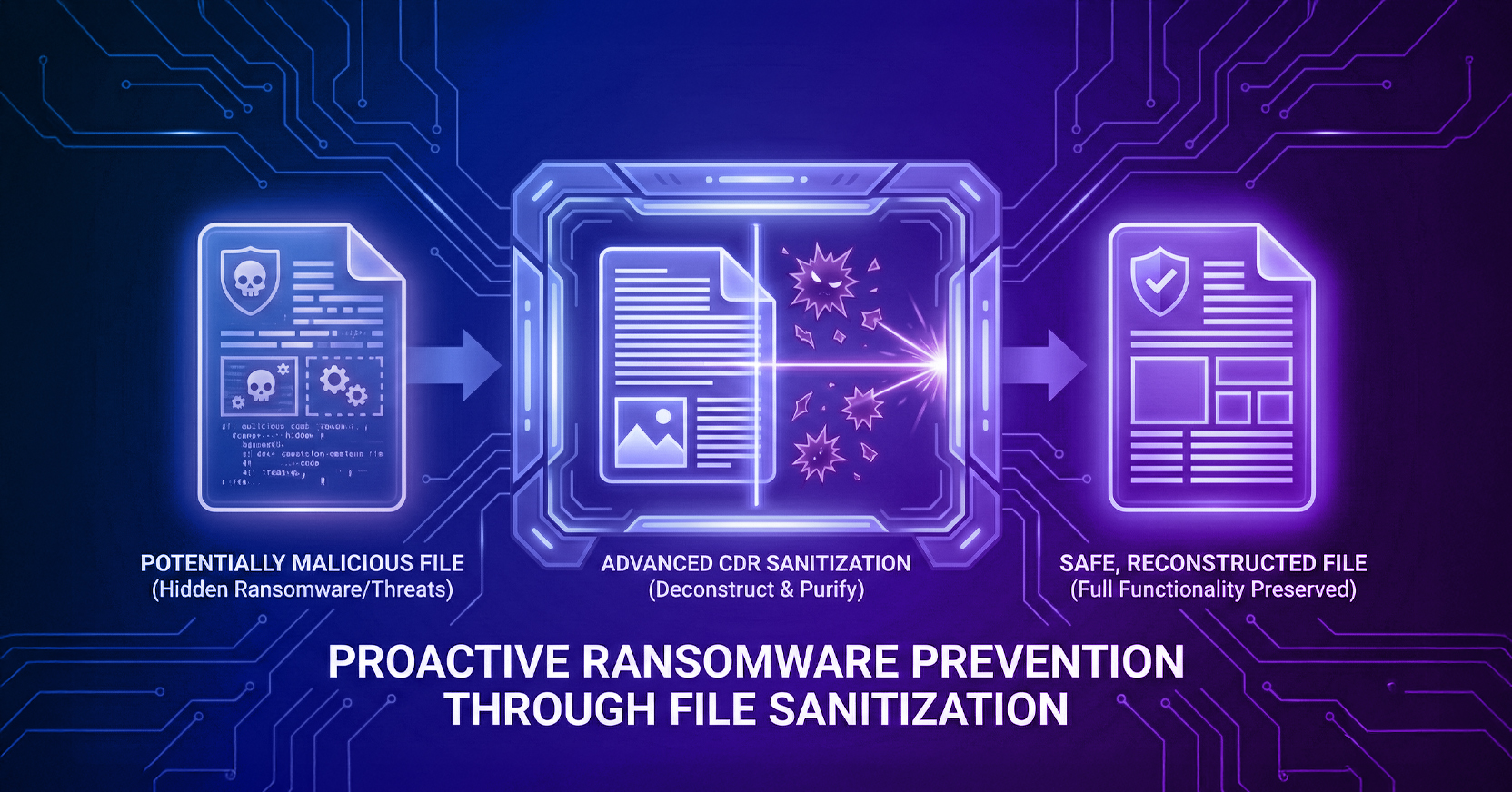
Attackers exploit this by hiding malicious logic in familiar formats such as macro-enabled documents, PDFs with embedded scripts, or password-protected archives. When these files are downloaded through a browser without thorough inspection, the opportunity to stop the attack early is lost. File security begins before a file ever reaches the endpoint, making the browser the first and most effective point of intervention.
Many of today’s security controls were designed for a time when the browser played a far more limited role and now operate largely outside of the browser itself. As a result, they lack visibility into what actually happens during a live browser session, where critical security decisions are being made.
Endpoint agents and browser extensions can provide some coverage, but their view is inherently partial. They may detect a file after it lands on disk or flag activity once a process has already started, but they rarely see the whole sequence of events that led up to that moment. Important context is lost, including how a file was delivered, which user action triggered the download, or what script executed inside the browser before anything reached the endpoint.
Endpoint-based protections also inherit the risks of the device itself. If a system is misconfigured, unpatched, or already under attack, controls that depend on that endpoint are operating from a weakened position. Attackers understand this and increasingly design payloads specifically to evade local inspection, knowing that once content is delivered and begins executing on the device, the window for prevention has narrowed.
By the time a file or script executes locally, security teams are no longer able to prevent an attack. They are responding to one. This does not mean endpoint security has no value, but it does highlight a structural limitation. Models that depend solely on endpoint agents or extensions engage too late in the attack chain, after the browser has already completed its role in delivering and initiating the threat.
Browser isolation solutions, such as Secure Enterprise Browsers (SEB), change the equation entirely. Rather than allowing active content to execute on the endpoint and attempting to contain the damage afterward, browser isolation prevents execution from taking place on the device in the first place. Web pages, scripts, and downloaded content run in a controlled cloud environment, not on the user’s system.
In this model, the browser session serves as a secure viewing layer rather than an execution environment. Users interact with content normally, but they receive only safe visual output. Malicious scripts, exploits, and JavaScript never reach the device, because there is nothing local for them to run on.
That shift has meaningful strategic implications. Security no longer depends on endpoint hygiene, perfect patching, or consistent browser configurations. It does not rely on users making the right decision at the right moment. And it eliminates the need to detect threats fast enough to stop them mid-execution.
By moving execution away from the endpoint entirely, isolation turns the browser from a persistent source of exposure into a point of control. It is a structural change, not an incremental improvement, and it fundamentally alters how file-borne and web-based attacks can unfold.
One of the most important outcomes of browser isolation is consolidation. By shifting execution away from the endpoint, a single control plane can address multiple attack paths simultaneously. Phishing pages, malicious web content, and file-based threats are all neutralized using a single underlying mechanism rather than a collection of disconnected tools.
This approach also delivers consistency. Security policies are enforced uniformly, regardless of where users are working, the device they are using, or how they access content. Whether a file is downloaded from a SaaS platform, a link is clicked in an email, or a web page is rendered in the browser, the same controls apply.
The result is broader coverage with less complexity. Instead of stacking point solutions to chase individual threats, security teams gain a unified layer that addresses how attacks actually enter the organization. Browser security becomes a platform, not a point solution, closing multiple paths at once without increasing operational overhead.
By the time a downloaded file reaches the endpoint, many defensive options have already disappeared. The browser has completed delivery, and content may have been rendered or unpacked; any opportunity to stop the attack early has narrowed significantly.
Early intervention in the browser determines whether an attack can move forward at all. Decisions made during download and execution are what separate a routine interaction from the beginning of an incident. When control is applied upstream, threats are stopped before they have a chance to progress beyond that initial moment.
As the browser has become the primary workspace, it has also become the most reliable path into the enterprise. Ignoring that reality forces organizations into a reactive posture, where they respond to incidents after attackers have already gained a foothold.
Treating the browser as the front door to the enterprise aligns security with how work is done today. When protection is applied at this entry point, threats are addressed before they can spread, rather than being chased across endpoints and systems after the fact. This shift reflects a move away from containment and cleanup toward prevention.
Prevention-first, cloud-delivered browser security, such as Menlo’s Secure Enterprise Browser solution, stops a number of attacks before they ever reach the endpoint, removing the conditions attackers rely on to succeed—all without forcing users into a single, restrictive browser that may hinder productivity and flexibility. Menlo Security also provides multiple capabilities to keep the enterprise safe, including remote access, threat prevention, and Zero Trust file security, each working in tandem to keep browser and file threats out of the endpoint.
Contact us today for a quick demo and see for yourself how your organization can prevent file-borne threats that start at the browser.
Menlo Security