Files remain one of the most consistently exploited and least controlled attack vectors in the enterprise. Traditional security layers, including AV, EDR, DLP, and DSPM, react only after a malicious file has entered the environment or rely on signatures that fail against zero-days and AI-generated variants. This leaves a persistent blind spot that attackers continue to weaponize.
Content Disarm and Reconstruction (CDR) closes this gap by taking a prevention-first approach. Instead of detecting malicious elements, CDR assumes every file is untrusted and rebuilds it using only verified, safe components. Modern CDR, led by Menlo Security technology, preserves full file functionality while eliminating both known and unknown threats in milliseconds. This advancement elevates CDR from a niche tool into a standalone category within the modern security stack.
As organizations move deeper into Zero Trust architectures, CDR becomes foundational. It enforces the “never trust, always verify” principle at the file level, preventing threats before they can execute and ensuring that downstream tools only handle clean content. With support for over 200 file types, seamless integration across email, browser, and data workflows, and zero false positives, Menlo is setting the new standard for proactive content security.
CDR is rapidly emerging as a required capability for enterprises in high-risk and compliance-driven sectors, serving as a critical complement to existing detection-based solutions. It represents the next core category of cybersecurity: ensuring every file entering the business is safe, usable, and trustworthy.
Every organization today runs on data. Files are exchanged across teams, shared with customers, uploaded through portals, and synced to the cloud, all in the name of productivity. Yet this same activity exposes one of the most overlooked weaknesses in enterprise security: the file itself. Files remain one of the least controlled and least understood entry points for attack. Within a single document, spreadsheet, or PDF, a weaponized payload can be hidden, capable of bypassing detection, exploiting vulnerabilities, and compromising entire systems before anyone notices.
Security teams have layered their defenses with antivirus, endpoint detection and response (EDR), data loss prevention (DLP), and data security posture management (DSPM). Each tool serves a purpose, but all share the same limitation: they react after the threat has already entered the environment or depend on signatures of known malware. None of them can proactively neutralize hidden threats before the file is opened, shared, or processed. The result is a persistent gap in protection that attackers continue to exploit with increasing sophistication.
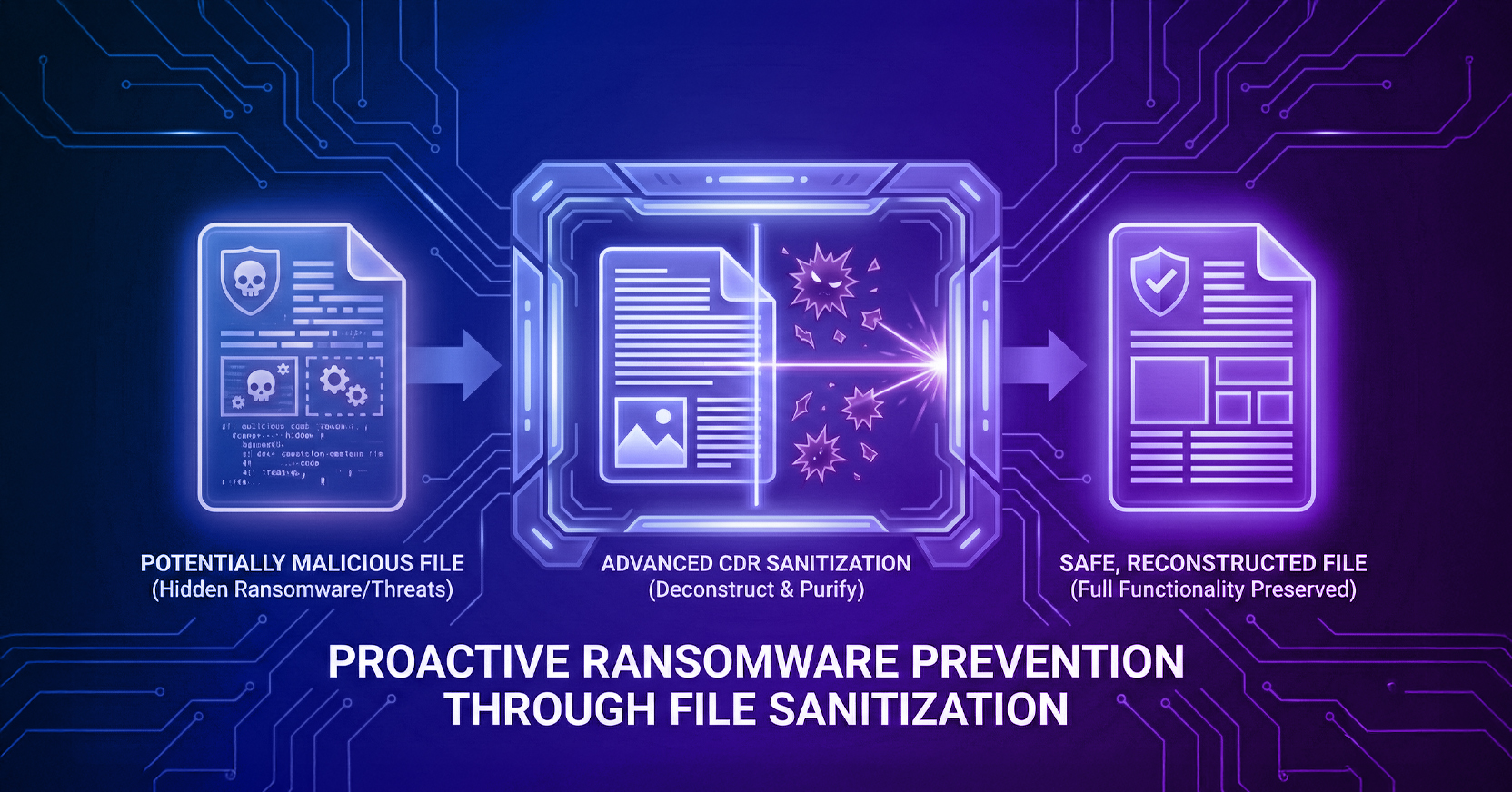
This is where Content Disarm and Reconstruction, or CDR, comes in. Unlike reactive tools that detect, block, or quarantine, CDR operates on a different principle: it assumes every file is untrusted and rebuilds it cleanly. It removes the uncertainty that detection-based tools leave behind, ensuring users receive safe, fully functional content without delay. CDR isn’t just another security feature. It represents a new category of proactive defense, designed for a world where data never stops moving and trust must be earned with every file.
For years, CDR was misunderstood, dismissed as a niche tool for file sanitization rather than recognized for what it truly is: a new security discipline built for the modern threat landscape. Early implementations often flattened files or stripped out entire sections of content, prioritizing safety over usability. That compromise made sense when the priority was simply to stop infection at all costs. But security and productivity no longer need to exist in tension. CDR has evolved far beyond its origins to deliver proactive, Zero Trust content security that protects without disruption.
This evolution couldn’t have come at a more critical time. File-based threats remain one of the most common malware delivery vectors, often used to bypass detection systems that rely on signatures or behavioral patterns. Attackers know that a single spreadsheet or PDF can pass through layers of defense unnoticed, triggering a chain of infection once opened. Reactive tools, such as antivirus or EDR, step in only after the damage has begun, while sandboxing slows down workflows and still misses cleverly disguised payloads. The speed, volume, and sophistication of modern attacks demand a different approach, one that prevents threats outright rather than chasing them down after the fact.
That’s where modern CDR stands apart. Its defining characteristics make it more than just another security tool. It embodies proactive defense. First, it’s prevention-first: CDR neutralizes both known and unknown threats before they reach the endpoint, ensuring malicious code never touches the environment. Second, it operates with zero detection dependency: instead of trying to spot the bad, it assumes every file is untrusted and reconstructs a clean, safe version using only verified elements. And finally, it achieves this without breaking usability. Solutions like Menlo’s Positive Selection® technology preserve every legitimate feature and function from macros to password protection, so business operations continue without friction.
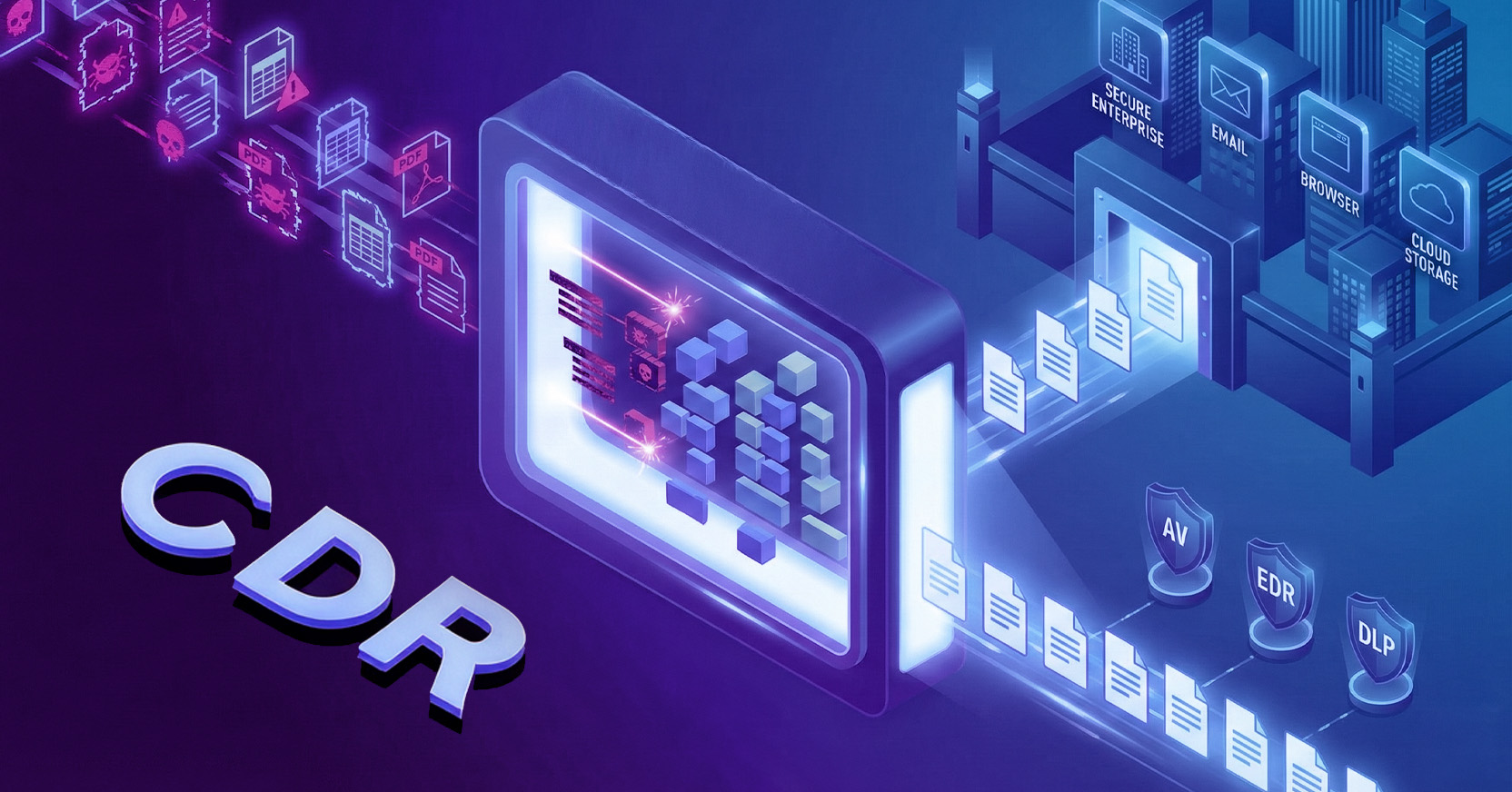
To understand why CDR deserves its own place in the security stack, it is helpful to examine how it differs from the tools enterprises already rely on. Each existing category of EDR, AV, DLP, and DSPM plays a critical role in protection, but all share one limitation: they react to problems after they’ve already entered the environment. CDR, by contrast, operates before the threat ever has a chance to execute. It doesn’t detect, respond, or block; it rebuilds.
EDR and AV live in the world of detection. They look for indicators of compromise, alert on suspicious activity, and mitigate once something has already gone wrong. DLP and DSPM, meanwhile, operate within the realm of governance, helping organizations understand where data resides and whether it’s being used or shared appropriately. Yet none of these tools actually clean the content moving through the enterprise.
CDR fills that missing role. It acts as a proactive filtration system, inspecting every file that crosses the boundary between trusted and untrusted sources, removing malicious code, and reconstructing a verified, safe version in real-time. The result is not another reactive control or compliance gate, but a foundational layer that ensures all downstream tools, users, and processes interact only with clean content. While other solutions react to or regulate data, CDR redefines the flow itself, securing it at the source.
The rise of Zero Trust has altered the security landscape. In a world where nothing and no one is inherently trusted, every file entering an organization should be treated as potentially hostile. Yet most security stacks still rely on reactive inspection, waiting for a signature match or a behavioral trigger before taking action. That’s no longer enough. To align with Zero Trust principles, security must verify that every piece of content is clean before it’s allowed to move, open, or execute. CDR makes this possible by rebuilding files into known-safe versions, automatically enforcing trust at the content level.
The urgency is only increasing. Generative AI has supercharged the threat landscape, enabling attackers to create an endless array of malware variants and obfuscate payloads faster than traditional tools can adapt. Sandboxes can’t analyze every variation, and EDRs are built to detect activity after the fact. The result is a widening gap between the speed of attackers and the responsiveness of defenses. CDR closes that gap by neutralizing malicious code on arrival long before an exploit can deploy or evolve.
At the same time, businesses are under immense pressure to stay productive. Quarantining, blocking, or flattening files disrupts workflows and frustrates users who simply need to complete their tasks. Advanced CDR solves that tension, delivering both safety and functionality. Files arrive sanitized and are instantly usable, allowing work to continue without delay or doubt.
That’s why high-risk sectors, such as finance, healthcare, and government, are rapidly embracing enterprise-grade, policy-driven CDR. These industries can’t afford downtime or data compromise, and they operate under intense scrutiny for compliance. With CDR, they can maintain operational efficiency while enforcing the highest standard of Zero Trust content security. It’s not just a technological upgrade. It’s a necessary evolution for organizations that refuse to choose between security and productivity.
As organizations recognize CDR as essential to modern cybersecurity, Menlo is defining the standard. Its technology represents the most advanced form of CDR, which is built on a simple principle: instead of detecting or removing threats, it rebuilds files using only known-good elements. The result is a clean, fully functional version of the original file, guaranteed safe and ready for use.
Menlo’s API-first architecture ensures seamless deployment across secure browsers, email gateways, and data detection tools, integrating without friction or disruption. It processes over 200 file types in milliseconds, eliminating sandbox delays and manual reviews while providing real-time insight into neutralized threats.
For regulated sectors, Menlo adds policy-driven automation that enforces compliance while keeping users productive. Security rules are applied transparently, ensuring safe data handling without interrupting workflows. Fast, seamless, and scalable, Menlo File Security redefines what it means to protect content in a Zero Trust world.
For analysts and enterprise buyers, the rise of CDR signals the next major shift in how the industry defines complete data protection. Just as EDR and DSPM evolved from niche tools into distinct, analyst-tracked categories, CDR is now approaching a similar inflection point. It’s moving from a quiet supporting feature to a market-defining capability, one that directly addresses the gap left by reactive and detection-based controls.
This evolution has real implications for procurement and strategy. As organizations strengthen their Zero Trust architectures, CDR should be written into RFPs and evaluation criteria alongside EDR, DLP, and DSPM. The ability to proactively sanitize and reconstruct content is no longer optional. It’s a foundational requirement for ensuring every file entering the business is verifiably safe. Enterprises that treat CDR as a core component of their data protection strategy not only strengthen their security posture but also streamline compliance, thereby proving due diligence against malware and data exposure risks.
For vendors, the takeaway is clear: skipping file sanitization leaves attack surfaces open and compliance efforts incomplete. In a world where files move constantly between users, systems, and cloud platforms, security stacks that lack CDR are leaving their most common threat vector undefended. Analysts are beginning to recognize that gap, and buyers are starting to demand solutions that close it.
CDR has outgrown its early reputation as a supporting feature. It’s no longer a bolt-on for secure enterprise browsers like Menlo or an add-on to DLP. It’s the modern endpoint for content security. In a Zero Trust world, where every interaction must be verified and every file treated as untrusted, CDR provides the assurance that other tools can’t. It doesn’t wait for a breach to act or depend on detecting what’s malicious. Instead, it guarantees that every piece of content entering an organization is clean, usable, and safe.
Looking ahead, CDR is poised to take its place alongside EDR, DLP, and DSPM as a foundational layer of the security stack. As attackers continue to evolve and weaponize new technologies, prevention will once again become the defining advantage. CDR offers exactly that protection that’s proactive, automated, and frictionless.
Menlo is leading this shift, defining what enterprise-grade CDR should look like and setting the standard for Zero Trust content security. The organizations that recognize CDR’s role early will be the ones best prepared for what comes next.
Menlo Security