Menlo Closes the Loop on Zero-Day and AI Agent Attacks with New Google Security Operations Integration
Details


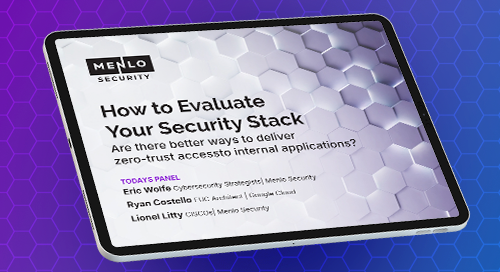
Most organizations spend years building Zero Trust. They secure the path to applications — and then stop.
VPNs connect users to the network. VDI provisions a virtual desktop. But what happens inside the session? Who can see what. What gets downloaded or exported. Whether a contractor on a personal device has the same permissions as a full-time employee on a managed laptop.
That's the gap most access architectures don't close. And it's the gap attackers have learned to use. The 2026 Verizon DBIR found that VPN and edge-device exploitation rose 8x in a single year — from 3% to 22% of initial-access cases.
Your next VPN renewal isn't going to fix that. Neither is a more expensive VDI seat.
Here's what you'll walk away with:
✅ Why most Zero Trust deployments govern access to apps — and leave the session itself ungoverned
✅ The 5 questions every Zero Trust vendor should answer (most can't)
✅ Methods to give contractors and BYOD users secure access
✅ What a clean HIPAA or PCI-DSS audit trail actually looks like
We'll help you evaluate what zero trust access means in your organization,
%20Support-Solution%20Brief.png)